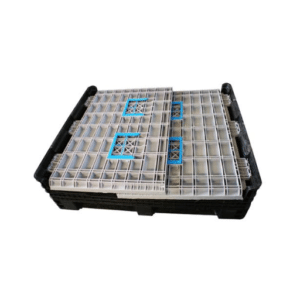
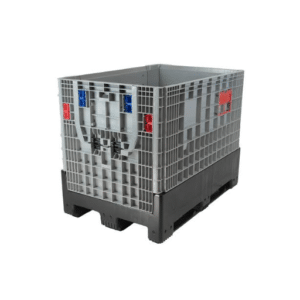
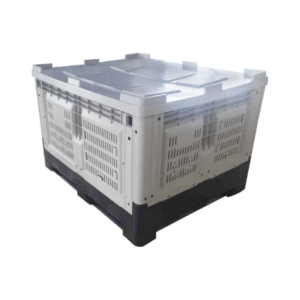
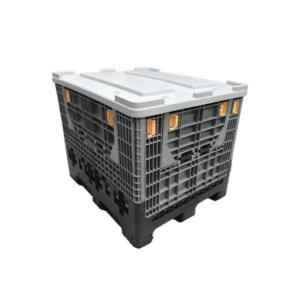
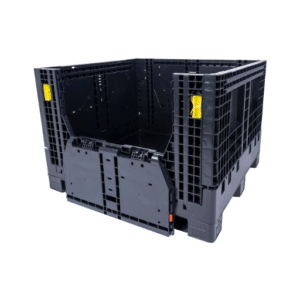
Plastic pallets have changed the way of doing things in logistics and warehousing, but still, not all pallets are equal. If the discussion is about heavy load handling, harsh condition enduring, or long-term lifespan, then steel-reinforced plastic pallets are the best choice. They have been made for enterprises that require the highest strength and reliability; these pallets have the advantage of being lightweight due to plastic but at the same time have the strength of steel. But, what are the distinguishing features of them and why are they possibly the best answer to your most severe shipping and storage problems? This blog will discuss the benefits of steel-reinforced plastic pallets and how they can boost performance even in the harshest industrial settings.
Understanding Pallet Types

What are Steel Reinforced Pallets?
Steel-reinforced plastic pallets are industrial pallets that are intended to steep the combination of steel’s durability and structural integrity along with the lightweight and versatile feature of plastic. Each of these pallets possesses steel components that are hidden inside and thus contribute to the palet’s weight lifting and application area in the industry, manufacturing, logistics, and warehousing, etc. Heat and cold warping, cracking, and wear-and-tear are some of the problems that the steel-reinforced plastic pallets do not face as traditional wooden and plastic ones do, thus providing long-term support even in the toughest situations, and their hygiene, strength, and reusability make them a better choice for companies that need tough and eco-friendly ways of shipping and storing.
Benefits of Plastic Pallets
The benefits of plastic pallets are good enough that they meet the needs of the modern supply chain. The businesses as per the recent trends and search insights are more and more often wishing for cost-effective and environment-friendly solutions that make plastic pallets a favorite. The durability of plastic pallets has given them a longer life than wood, therefore, the cost of replacement will be much less over time. Furthermore, plastic pallets are also light which makes them easy to handle when moving.
Hygiene is another important aspect, more so in industries like food and medicine, as plastic pallets are non-absorbent to moisture, bacteria, and chemicals while the traditional wooden alternatives get infected. At the end of their life cycle, plastic pallets can be 100% recycled, thus they contribute to the sustainability initiatives and the world environmental goals alignment. Through its resilience, user-friendliness, and sustainability, plastic pallets give no competition to other ways of logistics streamlining bringing the businesses the fine efficiency they want.
Comparing Heavy Duty vs. Regular Pallets
Heavy-duty vs. regular pallets, the significant differences that mainly are between these two types of pallets are the material strength, load capacity, and desired applications. Heavy-duty pallets have been manufactured for industries needing strong support for large or heavy items, like manufacturing, automotive, or construction. Reinforced materials like high-density polyethylene (HDPE) or metal are what these pallets are often made of with a load capacity of more than 2,500 lbs. and that is why they are perfect for giant machines or bulk materials transportation.
In contrast, the usual pallets are made of light materials and are generally used in retail and food distribution. However, such pallets made of wood, plastic, or composite are suitable for general usage but they won’t last long under extreme pressure. They usually support dividers between a range of 1,000 to 2,500 lbs. load, depending on the fabrication and style.
Costwise, standard pallets are typically much more economical and have readily available stocks whereas heavy-duty pallets normally justify their price from the outset owing to strength and durability. However, in the long run, a more expensive pallet that lasts longer may reduce the replacement rate and provide a good return on investment.
To sum up, picking between heavy-duty and regular pallets completely relies on the particular logistical requirements, load sizes, and budget limitations of the business. The knowledge of these distinctions leads to the proper operation and resource gathering according to the specific industry needs.
Features of Steel Reinforcement
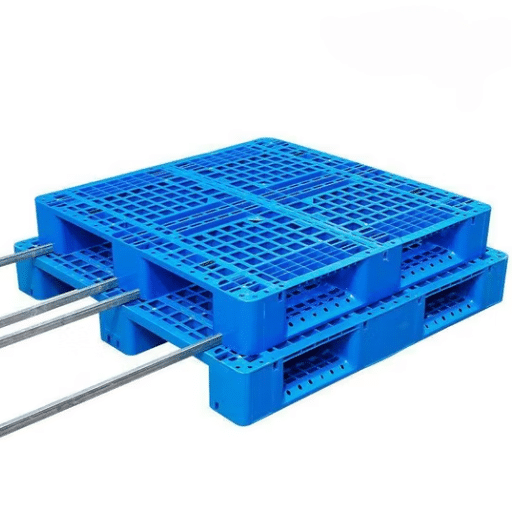
Advantages of Steel Reinforcement in Pallets
Industries that need high load-bearing capacities can rely on the steel reinforcement in pallets which is a strong and long-lasting solution. These pallets often dominate the area of strength and durability where wooden or plastic alternatives may fall short. where handling large weights is a common practice.
Key Advantages:
- ✓ Improved Durability: By using steel, the pallets’ mud-and-exp-water-resistance property is significantly improved, and they become almost indestructible even under severe wear resulting from heavy loads or constant usage.
- ✓ Load Resistance: Heavy duty pallets with steel reinforcement can easily hold very huge and heavy materials without sagging or breaking making them suitable for bulk storage or transportation in industries dealing with such activities.
- ✓ Weather Resistance: Steelforcement is a moisture, pest, and temperature variation proofing technology allowing it to last much longer than wood and plastic as the latter two could either rot or warping respectively under such conditions.
- ✓ Longevity: When maintained properly, the service life of these pallets is much longer as compared to that of traditional materials, thus reducing the cost and frequency of replacements.
- ✓ Eco-Friendly: The steel parts can usually be recycled at the end of their life cycle, thus contributing to the realization of the goals of sustainable practices and minimizing impact on the environment.
Furthermore, the recent trend indicates the increasing requirements for hybrid designs that fuse up the steel reinforcement and lightweight materials to achieve both strength and transport efficiency. These trends symbolize the changes in the industries’ demands that are mainly characterized by operational reliability and cost-effectiveness.
Steel Reinforcement and its Impact on Durability
One way that steel reinforces the durability is through great strength and its ability to resist stress, thus making the steel structure able to carry heavy loads and endure difficult conditions over a long time. Its property to easily mix with concrete avoids cracking and thus keeps the buildings stronger even at the constructors’ difficult pressure levels. Also, steel when treated properly does not corrode, thus it can be used in various environments including those with moisture or extreme weather. Those features make the by-product of steel reinforcement a major input in the modern construction industry since it is reliable and has a long-lasting performance.
Areas of Operations for Steel Reinforced Plastic Pallets
Applications of steel reinforced plastic pallets can be found widely in industries that require both durability and load-bearing capacity. Heavy-duty warehousing, manufacturing, and logistics are among the sectors where these pallets are used and they are able to manage the heavy goods coming in and out without being damaged or changing their original state. Cold storage and chemical industries have highly demanding conditions but still, these pallets are right there since their moisture, corrosion and chemical resistance properties are functioning. Their standard dimensions and sturdy structure facilitate smooth integration into automatic systems and consequently, dependable performance.
Rackable and Stackable Options
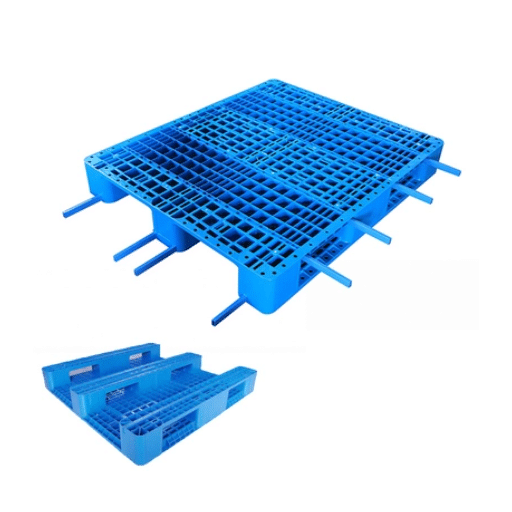
Understanding Rackable Plastic Pallets
Rackable plastic pallets are made to be very strong and stable to support the goods on racks. They are also designed for heavy loads in warehouse environments and at the same time the safety and efficiency are granted. The reinforced structures of the pallets distribute the weight to reduce the possibility of sagging and deformation. Their non-porous surfaces do not allow moisture to get absorbed thus making them suitable for the pharma and food industries that require high hygiene standards. The pallets are reusable, long-lasting and 100% recyclable thus supporting the eco-friendly trend. Also, the adoption of rackable plastic pallets in automated storage and retrieval systems (AS/RS) has been very beneficial since their precision design assures the perfect compatibility with the modern machines thus increasing the productivity and minimizing the operational downtime.
Stackable Pallets vs. Nestable Pallets
Before finalizing between stackable and nestable plastic pallets, you should weigh their functions and your operations’ precise demands. Stackable pallets are made to have a solid base that makes them very stable when stacked on top of each other so that they can be stacked with maximum height and space efficiency in both storage and transport. They are mainly used in sectors where firmness and load-bearing capacities during shipping or when space optimization is critical are the main concerns.
However, nesting pallets can be defined as one that can be placed and occupies less space when they are not in use, hence, no space is wasted. This feature makes them very valuable for companies recovering floor space is crucial, such as distribution centers or warehouses with fluctuating inventory levels.
Recent campaigns have indicated that stackable pallets are more widely accepted in sectors using heavy-duty applications, while their nestable counterparts are ascendant in industries where there is frequent product turnover and stringent budget measures. All the same, the selection of each type goes through the common gate of being reusable and sustainable thus saving costs and reducing the environmental impact in the long run. The consideration switches to weighing space efficiency against load capacity plus the requisite operational workflow.
Choosing the Right Configuration for Your Needs
It is of great importance to cater for the specific requirements of your operations in selecting the right pallet configuration. For heavy-duty industries, stackable pallets are perfect due to their ability to bear heavy loads and also their stable structure while providing great support. Conversely, in cases where there is a great demand for fast-moving products and storage space is a major concern, the nestable pallets would be the right choice, as they furnish the user with very economical ways of handling and storage. Besides, look into the storage space, weight required, and workflow efficiency when making the decision, because these will assist you in ensuring that the chosen pallet type fits in well with the operational goals and is also in line with sustainability efforts.
Heavy Duty and Double Sided Pallets
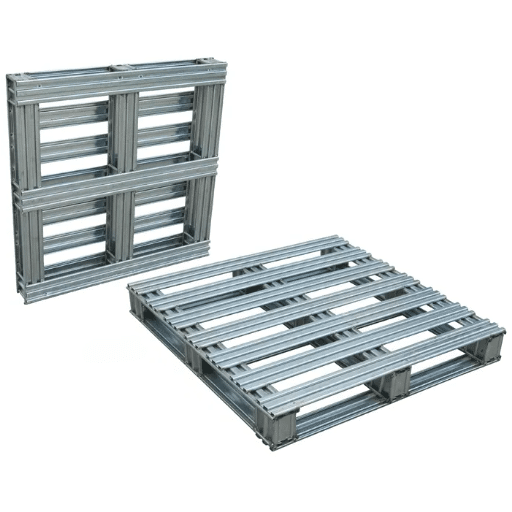
What Makes a Pallet Heavy Duty?
A pallet is regarded as heavy-duty when it is meant to bear large weight capacities and endure rough use in harsh environments. Pallets of this sort are usually made of tough materials such as hardwood, plastic, or even metal which are to last long. These heavy-duty pallets are designed with strong structures such as reinforced frames and other supports for the even distribution of weight. Consequently, they have wide applications in places where heavy machinery, large goods, or high-volume shipping are done since they provide the much-needed strength and stability.
Benefits of Double Sided Pallets
Two-sided pallets bring a lot of benefits to the industries that need efficient, large-capacity storage and transportation solutions. The fact that they can be used both ways due to their symmetrical design makes it very easy and quick to work with them in the warehouse areas. The design also contributes to the optimization of the stacking stability, thus making them perfect for heavy loads or prolonged storage. In addition, they are mainly made of materials that are very durable such as hardwood or high-density plastic, so they not only last long but also resist wear and damage.
Based on the latest industry trends, double-sided pallets are becoming more and more popular for their environmental friendliness. Not only has the market for sustainable products increased, but also the production of double-sided pallets using recycled materials has become a practice among many manufacturers. Their construction is both reusable and sturdy, which cuts down the waste over time, hence supporting the efforts of conserving the environment even more. The range of applications is wide, covering different sectors like manufacturing, food and beverage, and logistics, double-sided pallets provide an impressive combo of strength, efficiency, and sustainability.
Applications of Heavy Duty Plastic Pallets
Heavy-duty plastic pallets are very flexible and are able to fit the needs of a variety of industries which is the reason why they are so widely accepted. In manufacturing, they are used to support heavy machinery parts and raw materials without fail. Hygienic properties are the reason why the food and beverage industry is so fond of them, they are easy to clean and, therefore, virtually contamination resistant. Logistic and transport operations are other industries that have found these pallets very effective in maintaining high loads securely, maximizing space, and minimizing handling-related damage. Their sturdy design guarantees that they will last long even in very harsh conditions, thus, they will be in constant use for both storage and transit entities.
Comparing Materials: Steel, Plastic, and Wood

Advantages of Steel Over Wood Pallets
Steel pallets have lots of benefits when compared to wood pallets hence the use of pallets made of steel would be the best option if one were to look at the life span and strength of the pallets. The main difference is that wood is not moisture, insects, and decay resistant, which ensures that a longer life is achieved with minimal maintenance. Steel can bear loads that are much heavier than the normal loads without the risk of warping or breaking and thus is well suited for industrial and heavy-duty use. Moreover, steel has the quality of being resistant to fire and, at the same time, easier to clean, thus meeting the requirements of safety and hygiene in the industries like food, pharmaceutical, and chemical. This may incur a higher initial cost, but steel pallets have a long life and hence are very reliable and cost-effective compared to wood pallets that would need to be replaced often.
Plastic vs. Steel: A Material Comparison
When it comes to comparing plastic pallets with steel pallets, the final decision mainly depends on the particular use of the pallets. Plastic pallets are very light, have a moisture-resistant property, and are not prone to splitting which makes them the right choice for the food and pharmaceuticals industry where such handling is required. On the contrary, steel pallets are preferred for their strength, durability, and load capacity so they will be used in heavy-duty storage or long-term storage applications. Though plastic pallets are recyclable and such initiatives are cost-effective, steel pallets have the characteristic of being very long-lasting and having minimal maintenance which would eventually make them the greenest of the material over time even if their production energy is much higher. Interestingly enough, the two materials seem to be opposite that, yet they should just be viewed as two sides of the same coin—the selection whichever aligns with operational needs and sustainability goals.
| Material | Key Advantages | Best Use Cases |
|---|---|---|
| Steel | High tensile strength, fire resistant, easy to clean, long lifespan | Industrial, heavy-duty applications, food/pharmaceutical industries |
| Plastic | Lightweight, moisture-resistant, recyclable, no splitting | Food, pharmaceuticals, hygienic handling requirements |
| Wood | Lower initial cost, readily available, repairable | General use, retail, standard load applications |
Environmental Impact of Pallet Materials
It is necessary to consider the entire lifecycle of a pallet material while measuring its impact on the environment. Although plastic pallets are made from non-renewable resources, they are highly recyclable, allowing them to be used several times and reducing waste. Their production, however, consumes a considerable amount of energy and raw materials. On the contrary, steels provide great functionality as they do not only last longer but their durability means that they are replaced less frequently which results in the lower material usage over time. In spite of the high production energy, the recycling and along with the life of the steel pallets make it a good choice regarding sustainability in running different sectors. Thus, the decision to make a switch between the materials for the operation should reflect the choice of experiencing the benefits in a short time or long environmental benefits.
📚 References
-
Handling Equipment
This document explores the evolution of pallets, including metal-reinforced pallets designed to extend durability.
Read the document -
Implementation of American Iron and Steel Provisions
This document provides insights into the use of steel materials in various projects, including pallets.
Read the document -
Materials and Construction Details
This specification document includes details about steel materials used in construction, including pallets.
Read the document
Frequently Asked Questions (FAQ)
❓ Are steel-reinforced pallets suitable for corrosive environments or chemical packaging?
If the right materials are used, such as stainless steel rods or carbon steel with corrosion-resistant coatings, then It is possible to employ steel reinforcement in corrosive environments. For chemical packaging, black plastic or injection-molded polymers that resist chemical attack can be used for making the top deck and deck of the pallet, while the steel insert is kept safe or is isolated. Compatibility with the specific chemicals and packaging, including the possibility of the pallet absorbing spills, should be tested so that the application requirements are met. Rubber or protective sleeves over tube or rod elements can also prevent direct exposure and prolong the life of the product. Expensive aluminum reinforcement is often selected to avoid corrosion, but designers must consider their price, tensile properties, and potential galvanic reactions. The implementation of proper maintenance and inspection schedules will also lessen the number of replacements required in tough environments.
❓ What is the change in pallet performance when switching between steel reinforcement and aluminum?
Steel reinforcement in fact grants the characteristic of higher tensile strength and improved resistance to bending for heavy unit loads, thus it is suitable whenever the factors of durability and cost that is per strength are prioritized. On the other hand, Aluminum reinforcement presents an option that is lighter in weight and consequently contributes to the drop in freight costs while also being naturally more resistant to corrosion than steel in many places. The deck material, which could be black plastic, injection-molded polymer, or rubber-topped, in conjunction with the rod or tube reinforcement, decides the surface grip and the compatibility with pallet jacks. The requirements of the application such as being exposed to corrosive materials, the frequency of handling, and the required lifetime, will dictate whether steel or aluminum is the better choice. Designers also have to think about the tooling for the mold and the placement of the insert to facilitate the proper integration of the top deck with the reinforcement. For numerous packaging and material handling scenarios, a hybrid design that is balanced in terms of performance, cost,
❓ What is the difference in load-bearing capacity for a pallet with steel reinforcement?
The introduction of steel reinforcement in the manufacture of a pallet allows for a significant rise in the unit load without causing excessive deflection thanks to the remarkable tensile strength that the steel reinforcement gives not only the deck but also the top deck in comparison with common standard pallet designs. The performance of the strengthened deck combined with the rod or tube reinforcement that is embedded across the entire area is not only weight distribution but also shock absorption caused by the handling and transport, which in turn leads to a longer life of the pallet in demanding material handling applications than f. A compatibility check must be done for pallet jacks and forklifts as some steel-reinforced designs change the profiles of the deck thickness and lip. In corrosive environments, the combination of stainless or coated inserts will ensure that no rust is formed on the rod or tube elements. Designers usually try to balance black plastic decks that are injection molded with steel reinforcement as a durable, lighter-weight option compared to aluminum.
❓ Are steel-reinforced pallets to fit inside a container for international shipping?
Steel reinforced pallets are in most cases conformable to standard container dimensions and are meant for the occupation of space to the utmost while still safeguarding the packaged goods. The movement of the unit loads is minimized because of the solidness of the pallet and the stability of the stack is helped by the maintenance during maritime transport of the stability of the stacks. The moisture resistance of black plastic or injection molded decks with steel rods is better than untreated wood which is an advantage for containerized shipments. However, there may be containers with lip or door constraints that may restrict the size of the pallets, so it is always better to confirm the 48 or other dimensions before loading. The packaging team should also look into corrosion protection for steel parts when shipping corrosive materials or when in a marine environment. For instances, aluminum-reinforced options are available that are lighter, but the cost is higher.
❓ What does a lip or edge design signify on a steel reinforced pallet?
The lip or edge design not only refers to the guidance provided to the pallet jacks and forklifts but also to the protection of the pallet deck from edge impacts that would otherwise damage the mold or injection-molded top deck. A reinforced lip with embedded rod or tube elements is a perfect combination of bending resistance and stress absorption in lifts during handling. In heavy-duty applications, the lip profile can be made to be customer-specific; thereby, it is not only compatible with particular jacks but also secures the loads in the containers. Black plastic decks with reinforced lips are taking place of wood in spots where corrosion or washdown is a concern, and thus, they are providing fewer replacements than wood. Designers need to think about how the lip might mingle with stretch wrap and packaging to ensure product slippage is prevented. If aluminum components are part of the lip, then they will have to be checked for galvanic compatibility with the materials in the unit load.