Effectiveness, exactness, and the ability to expand are of utmost importance in today’s frantic pace of work in a warehouse. Production can be affected where there are manual operations, especially with labor costs and errors, which lead to twists in the supply chain. This is where AS/RS (automated storage and retrieval) systems come in handy, since as new organizational operations that accomplish this by maximizing utilization and minimizing mistakes. This article will explain the best approaches to AS/RS implementation for warehouse operations, highlighting the advantages, features, and other aspects of using this innovative tool. If your goal is to study how to lower process costs, improve inventory control, or ensure that services will be provided from the warehouse in the future, this paper should help with decision-making by providing the technical and strategic framework.
Understanding Automated Pallet Systems
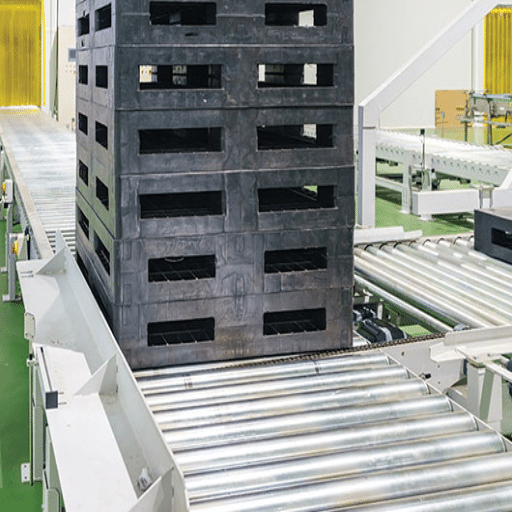
APS, retorted Automated Pallet Systems, is a set of technologies that helps in the improvement of warehouse activities such as storage, movement, and arrangement of goods that have been packed onto the pallets. These include machinery and software used to mechanize necessary functions, as well as moving automated warehouse pallets for storage or work orders to retrieve contributions. This best practice of APS is because it increases productivity, controls labor costs, helps in inventory management, and enhances safety measures. Besides, APS eliminates interaction during human engagements, minimizing injuries through wrong manipulations. Hence, efficient equipment that is applicable to logistics of heavy stock strategies, which require a fast turnover rate.
What is an Automated Pallet Warehouse?
Automated Pallet Warehouse (APW), on the other hand, is an extremely modern storage facility that uses robots, conveyors, and warehouse management systems (WMS) in order to carry out the operations of managing pallets, among others, in an effective way. The objective of these facilities is to make full use of the available vertical as well as horizontal space, incorporating mechanization for all operations to the most precise level possible. The main subsystems of an APW are the automated storage and retrieval system (AS/RS), automated trolleys for pallets, and some very smart software for maintaining inventory control. All these tools used in an automatic warehouse have the effects of diminishing labor costs, enhancing the rate of throughput, and reducing the chances of human errors, which is suitable for industries with large inventories.
Overview of Automated Storage and Retrieval Systems
Automated Storage and Retrieval Systems (ASRS) is an invention of novel technology that enables different materials to be stored and retrieved from designated areas or warehouses more efficiently at a later time. These devices make it convenient for one to also organize their room, as the number of devices is reduced by using vertical lifts, shuttles, and cranes, unlike traditionally, where handling was done manually. In the modern world, a variety of ASRS are used for different applications, such as handling pallets that are units of load or smaller systems known as mini-load for small container operations, or even more unique systems for residential implementations, such as shuttle high-density systems.
The key constituencies of ASRS are increased buy-in of the storage facility, ensured accuracy in picking, and efficiency in operating activities, which leads to less human effort or less costs and defects. Additionally, current ASRS implementations also work with the Warehouse Management System to monitor practical and current inventory levels and operations. Such systems are used in various sectors such as production, online retail, or even the food industry, where the output is high enough and explaining the high rewriting requirements is needed.
Key Components of an Automated Pallet Shuttle System
An automated warehouse system’s movement of pallets to and fro the storage racks is facilitated by the following gadgets:
Shuttle Carts: These are mopeds that transport the pallets from point A to point B in a network of storage racks. The shuttle carts have sophisticated sensors as well as motor gears that make sure that the pallets are well placed in the designated areas.
Rack Structure: The rack structure is designed for high-density, multi-level storage, which is known as optimal utilization of height and width available. This can also be built to fit various rack heights and also weights to be carried by the racks.
Control Systems: They can be central or segregated control systems that run shuttle actions, control movements, and make sure that the pallets are handled correctly. Warehouse Management Systems (WMS) have been developed to communicate effectively and monitor inventories as they are moved from one location to another.
Hoisting apparatus and lifting aids: Elevators and conveyors are very common, especially in modern multi-tiered systems, and are one of the prime elements for vertical transfer of pallets between levels.
Power Supplies: With technological advancement in this area, increased efficiency is ensured in the operation of shuttle carts through lithium-ion batteries or even super capacitors, with recharge stations usually being placed in convenient locations for fast, fully automatic charging.
Security: There are already ready-made, automated pallet shuttle systems that have pallet protection in the form of laser protection zones, emergency stop buttons, and even check for overload in order to avoid accidents, damaging goods, or expectancy deviation.
These components offer such advantages as maximum speed, duration, and adaptability to storage requirements, which are necessary in handling efficient, ready, and time-bound automated warehouse pallets.
Benefits of Automation in Warehouse Operations

Modern automated warehouse pallets mainly focus on improving, expanding, and enhancing the operations done in a warehouse. Warehouse activities comprise several processes that are subjected to automation, for example, stock control, order picking, and unloading and loading of pallets, which leads to smaller labour costs, lower probability of mistakes, and higher space efficiency. Such warehouses also allow faster processes that help in increasing collection rates without sacrificing production quality or standards. Such mechanisms enhance the safety as well as reduce the chances of any work-related hazards with the use of safety monitoring and control systems, thereby becoming a necessary part of the contemporary supply chains.
Enhancing Operational Efficiency
In order to improve efficiency, one ought to offer hope. This makes the use of a business approach quite judicious as it improves both effective and efficient processes. In this case, application of, say, automated systems, automated warehouse pallets, and robotics, simplifies cases like big picture inventory control, procuring orders, and analyzing data in real-time. It is easier to perform demands as over and under, to utilize space to its fullest capacity, and to integrate processes whenever necessary. In addition, these energies support saving maintenance since they use intelligent equipment that effectively uses IoT devices and machine learning for predictive maintenance. Another focus of management concerns is training of employees and inculcating cross-functional work among them, thus enhancing the profitability of every process directed to the achievement of the vision. The above-mentioned activities and measures are examples of how companies can make such practices more effective and efficient.
Reducing Labor Costs through Automation
Reduction in labor costs can be brought about by automating monotonous work. For instance, dull repetitions can be made more efficient by putting together automatic systems and robots at the customer’s place of work. Robots within Business Process Automation can also be used to integrate and automate numerous other tasks, thereby lowering general error rates and wastage of time and money. Moreover, recent developments in automation have facilitated the integration of intelligent technologies within human systems, and these in turn have led to tablets capable of learning how to optimize processes, incorporating complex tasks at a cost below that of human power.
Thanks to the use of various machines and self-service kiosks, businesses’ costs on labor are reduced, and this allows employees to engage in more productive activities instead of the usual repetitive ones. Take the case of manufacturing sectors in which the use of several tools, such as automated warehouse pallets, facilitates the reduction in manufacturing timings. In contrast, in customer service, customer queries are answered by these customer care representatives, who are chatbots. In the long run, it is cheaper to use all accomplishment systems because they reduce overheads and demonstrate efficiency as required by the business.
Improving Accuracy and Speed in Retrieval Systems
For enormous databases or for responding efficiently to consumers’ requests, it is thoroughly important to enhance the performance of the retrieval system, in terms of both accuracy and speed. To achieve this, intelligent techniques such as adaptive machine learning algorithms are employed to manipulate the search results according to the user’s behavior on the fly. Indexing techniques like inverted indices are used to design effective data structures that facilitate the quick resolution of queries. Natural Language Processing (NLP), on the other hand, also plays a role in enhancing the comprehension of the system in order to return contextually apt searches. Moreover, performance improvement in terms of speed is further brought about by adopting parallel information processing and the collection of data in separate storage. These aspects, put together, cause performance and accuracy standards for retrieval systems within the present digital scenario to be fulfilled to a large extent.
Types of Automated Pallet Handling Solutions
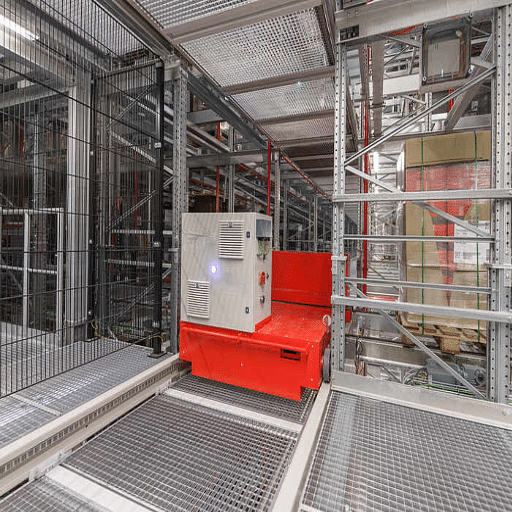
Advanced pallet automation solutions refer to those systems that seek to improve the flexibility of processes to store and retrieve as well as to transfer pallets from one point to another in a warehouse or a manufacturing plant. Among the major solutions available for use are automated guided vehicles (AGVs) and autonomous mobile robots (AMRs) that assist in the transportation of pallets without any human help. Moreover, the conveyor belts for the movement of pallets and the automated warehouse pallets are used for easy flow of materials within the storage areas and to other operational areas while working with great accuracy and speed. These techniques are used to improve activities, cut down the cost of the workforce, and avoid operational blunders in high-intensity logistics activities.
Automated Pallet Shuttle Systems
Automatic shuttles are advanced technologies developed to help increase the available space and ease the movement of pallets inside the warehouse. The systems have a semi-automatic nature in the sense that the shuttles can be programmed or remotely controlled to move arbitrary pallets within these shuttle systems. It helps shuttles to move along this rail structure as it facilitates the horizontal movement with the aid of forklifts to move pallets up and down the rack.
The main advantages of these systems include increased storage capacity because they support both the high bay racking and deep lane ones, and considerable time is saved because there are fewer movements. These systems are appropriate for high-turnover warehouses, e.g., cold stores and depots, where there is a critical challenge of space and efficiency in operations. The more developed versions include wireless interfaces and sensors that enable the proper placement of a pallet without impacting another structure, thus avoiding the occurrences of such errors in the operation.
The technology can work on either a FIFO or a LIFO basis, which adds to its versatility based on the needs of operations. Automated warehouse pallets offer enhanced productivity and efficiency even with this standard, rigid frame architecture.
Pallet Conveyor Systems
The systems that are generally used are designed for pallets (called after the main element used in the system from the lab) and include such elements at the basic structure stage as rollers and conveyor belts. Mechanical and automated warehouse pallet systems are used primarily in industrial processes. Pallets are moved within the system from one place to another, a distance that can actually be within several meters and certainly in different levels within a given platform, or are connected to workstations to ship or receive products. Some systems are capable of tracking these pallets via the European standard warehouse system WMS and ERP applications in place.
Pallet conveyor systems in the present times are developed in a variety of ways, from straight lines to curves, and even incorporating a vertical lift, which provides the opportunity to configure the installation in accordance with a customer’s specific operational design. Furthermore, modern pallet conveyor systems come with different functions such as load detection sensors, configurable logic controllers for automation, backup systems for reliability, among others. These systems also help greatly reduce the number of routine operations performed manually by employees, thus decreasing the chances of occupational injuries. Thus, pallet conveyor systems are considered to be one of the most important means of enhancing the logistics and supply chain processes in order to achieve higher productivity. In an automated warehouse, pallets are moved efficiently from one point of the facility to another, thereby ensuring a higher throughput, purpose, and effectiveness.
3D Automated Pallet Shuttle Technology
An amazing step up in warehouse automation is the 3-dimensional automated pallet shuttle technology that enhances the efficiency of storage, retrieval, and throughput. The concept uses self-propelled mobile bins beneath a racking system that is fully packed, and comprises the use of powered devices in the process of moving pallets in and out of storage. The shuttles meant for this task are laden with modern sensors that communicate with a base unit and guide them to a particular location where goods are to be inserted/extracted as they move in and out of the storage unit or warehouse. They, in fact, can perform three-dimensional movement that is going right or left, going up or down, and even shifting left or right to enable smooth movement of the supply.
Incorporating warehouse management systems (WMS) allows this technology to ensure inventory accuracy and limit the potential for errors when it comes to operations. This is mostly advantageous in all those environments that need rapid and high variation of inventory, as it helps to eliminate the idle time and optimize the available space. A comparison may be made between the conventional system and the 3D automated pallet squares, which demonstrates an enhancement of 50% in the storage space PROVISION while at the same time reducing the energy input. This makes them an equitable investment in industries like e-commerce, the food industry, and the beverage industry, as well as the pharmaceuticals, where both accuracy and agility are required.
Choosing the Right Storage and Retrieval Solution

Choosing the appropriate storage and retrieval system requires consideration of the nature of goods, available area for the warehouse, and the necessary pace of movement. Solutions are automated warehouse pallets and their stackers or lifts, levelers, or sections in case of high concentration and fast retrieval of products in such industries where comfort is better suited to precision. The choice of storage solution should also have the option of scalability so that expansion can be handled, and the energy issue should be considered to fit in with a green agenda. An experienced provider’s advice should be sought to ensure that the system being implemented fits within the immediate need for efficiency.
Evaluating Your Warehouse Needs
Analyzing the storage capacity, speed of picking and retrieval, and flows of operation in relation to factors such as the dimensions, weight, and life span of the stock to be warehoused is paramount to establishing the warehouse requirement. Some recent approaches about the limitations of satisfying design needs stress the need for more accommodating structures that can do without overloads, especially regarding full automation. Moreover, factors such as the arrangement of space for use, available options to facilitate expansion in the future, and also the requirements that need to be met regarding a safe and energy-efficient environment play a major role in determining the design and construction method to be chosen. Working with those who are knowledgeable about the optimization of warehouse operations will go a long way in ensuring that you have a workable plan for the tasks that need automation.
Factors to Consider When Selecting a Shuttle System
In choosing a shuttle system, there are various considerations that one has to make in order to meet operational goals. The first consideration should be the system throughput capabilities, which should be equivalent to the peak demand. This will ensure that all orders are executed without problems. These include, but are not limited to, cycle times and handling speeds, as well as adaptability of future demand growth. In addition, the warehouse design and storage space that can be utilized should be checked to see if the system one chooses can use both the vertical and horizontal spaces without any compromise on the ease of retrieving goods from the automated warehouse pallets. Furthermore, the type and kind of goods that will be handled are important parameters to look at as well. The reason is that the weight, size, and variability of inventory stored determine the scope of the design and what systems are suitable.
Apart from that, assess whether the warehouse management systems (WMS) have modes for integration to facilitate data exchange, control automation, and stock correct levels in the information systems. Look to ascertain that the shuttle system is able to support bidirectional communication with the existing or intended technologies. Also, take operational and operational costs into consideration by looking at power and maintenance, as they determine how reliable the system will be in the long term. Look for solutions that have low energy consumption, working with regenerative braking systems in between the periods, and using in-service divide modes for easy maintenance.
Last but not least, analyze the total cost of ownership (TCO) by weighing the cost of purchasing, installation, training, and maintenance. Through the tactical assessment discussed above, it is possible to pick the shuttle system that enhances productivity and space utilization in automated warehouse pallet designs and decreases costs, thus helping your business grow.
Integrating Automation with Existing Warehouse Processes
Before installing the current warehouse process into the automation system, an analysis of the existing system is made. This is imperative so that reinstallation is accomplished effectively, and it is determined which of the tedious functions offers the most benefit in terms of automation, such as inventory control, ordering, and even sorting. Analyse and install the systems that are appropriate, especially considering the software and compatibility of the equipment with the existing facilities. It is also useful to deploy appropriate scalable systems that will adjust and cater to the increased number of automated warehouse pallets owing to the operational expansion.
Appropriate circumstances to exercise best practices in foreclosure and debt collection involve proper changes in management. Establish a thorough integration strategy inclusive of system tests, staff instruction, and communication of any prospective changes in business processes. It is highly relevant for us to engage with other departments and processes, such as IT and the warehouse, to introduce automated systems that will be effective in the business. Likewise, after implementation, as levels of resource use must be sustained, certain results should be checked for the detection of weaknesses. These processes progressively incorporate automation, which is aimed at enhancing efficiency while at the same time experiencing minimal interruption of activities.
Future Trends in Automated Warehouse Technology

New developments in the fields of automated warehouses and their technologies have been and will be drastically changing their structure. The main factors of consideration are: taking replacement technology a step further in predictive analytics and warehouse decision support systems by incorporating artificial intelligence (AI). Indeed, robots and AMRs are progressively evolving, providing for more mobility in handling stock and processing orders. Also, within this context, the use of the seamless distribution ‘stick technology’ with IoT-connected devices enables easier transitions with tracking from storage to distribution. Lastly, the penetration of warehouse management is moving into cloud-based systems, which provide robust warehouse facilities, even in several locations. All these innovations aim at making functioning faster, with fewer resources and, in particular, in a dynamic market environment, managing increasing complexity with ease.
Advancements in Mobile Robots for Material Handling
What represents an essential breakthrough in the development of ways of handling materials increases the effectiveness and flexibility of the rearing of work in an automated warehouse. Pallets are also called mobile robots. Such machines, which are alternatively called autonomous mobile robots (AMRs), are equipped with sensors, cameras, and computer vision systems to move in changing environments without external guidance. In comparison with conventional automatic guided vehicles (AGVs), the AMRs do not operate only with fixed guide structures like magnetic tapes or rails; they can be commissioned much more quickly to increase the footprint.
Significant improvements comprise advanced obstacles circumvention using real-time environmental maps, enhanced multiple machine cooperation for effective workload sharing, and multi-SMADS coexistence with warehouse management systems for effective movement of goods. Target markets comprise e-commerce, production, and pharmaceutical sectors, where AMRs are erected with modular payload systems to supply diverse materials. The twenty-four availability of AMRs in the supply chain and the versatile characteristics make adopting them mandatory.
The Role of AI and Machine Learning in Warehouse Automation
Technologies like artificial intelligence and machine learning passively and greatly assist the automation of the warehouse by making the system either fast and complex or strong and robust, or a combination of both systems. To put it clearly, I feel that these systems help the management of inventory much better, as demand is measured accurately and everything can be tracked in real time. They offer route optimization of reachable areas of working areas for automated guided vehicles and autonomous mobile robots, improving the performance of materials handling. AI-driven analytics also improves operations in helping with decision making, which is much less costly and benefits more in terms of productivity in the entire organization.
Innovations in Conveyor and Stacker Crane Technologies
Once the technological developments of conveyor and stackers are improved, productive capacity will also increase more in an automated warehouse. In the past, many card users passed the same set of parameters in the CardInfo block to check the throughput and relieve congestion. Most of the transportation belts are now built with smart sensors and AI that help in controlling the movement of items more efficiently. Modular conveyors are also more common because they can be expanded and rearranged according to warehouse reconfiguration or an increase in volume.
Similarly, the technologies involving stacker cranes have advanced, incorporating IoT-driven diagnosis along with adjustment systems so as to lower the probability of failures and ensure continued operations. Advanced stacker cranes provide mechanisms that allow them to handle relatively more varieties of product shapes and also weights, thereby providing additional flexibility. Also, there are other energy-saving features, such as regenerative braking, which assist in minimizing energy use in line with the sustainability objectives. All these, among other developments, have brought a remarkable transformation in the intralogistics function, providing faster, more intelligent, and sustainable solutions for the contemporary supply chains.
Reference Sources
AI-Driven Warehouse Automation: A Comprehensive Review of Systems (2024)
This study explores the integration of AI technologies in warehouse automation, emphasizing their role in optimizing inventory management, order fulfillment, and supply chain visibility.
Pick-Up Plan in Shuttle Racks Warehouse – An Optimization Approach (2020)
This research focuses on optimizing shuttle rack systems for storing fast-moving goods. It introduces a linear programming model to minimize blockages during product retrieval. The study highlights the efficiency of shuttle-based storage systems in maximizing space utilization and reducing errors.
Frequently Asked Questions (FAQs)
Any Suggestions on the Best Options for Automated Warehouse Pallets and high-density storage?
The best options in such an instance are the ones that incorporate automated warehouse pallets with high-density storage infusion, where shuttle cars, storage and retrieval machines (S/RMs), or automated storage and retrieval systems (AS/RSs) are employed. This strategy increases the storage potential, allows for easier flow of the materials, and also enhances the productivity by means of automating the loading of the pallets in the storage systems and vice versa. A warehouse management system (WMS) or management software is also included to match the pallets, the storage places, or load carriers for effective pallet flow management.
Improving storage technology enhances storage capacity and warehouse utilization spaces, how?
Whereas, only with the advent of compact and high-density storage systems and pallet racking structures that are put in shuttles and storage channels, warehouses have increased their capacity by storing items vertically and using dense racks. The use of modern equipment can transform this congested pattern of storage into an aisleless type of storage. It helps in the effective management of storage locations and facilitates maximum use of all available space, thereby enhancing the effectiveness of any large storage area meant for storing any kind of pallets, and especially highly frozen areas.
Will I get this if, in a system, pallets are moved and stored properly automatically?
A storage system has various names that allow loading and automated retrieval of pallets with storage machines or conveyors. One or more of these systems is used, generally to transport pallets within the storage systems and thus to a preset pick zone. There is always and systematically a warehouse management system that manages motion perfectly and eliminates site overheads by store and retrieval systems that are advanced and autonomous.
Which warehouse management or management system is the most appropriate for automating the existing warehouse?
It is essential to have a comprehensive warehouse management system or any management software that is capable of integrating automation solutions and providing real-time inventory and rack management. Look for WMS features, which many times also involve aggregate levels of storage to be defined, referring to racks, shuttles, cars, SS/SS as such. At times, WMS is often combined with a warehouse control system to control the handling of the materials and preferably.
How does racking and pallet racking systems design influence the storage density and the storage channel dimensions?
High-density storage is very hard to achieve without pallet racking as well as racking system design. Selection of storage solutions like drive-in racks, push-back racks, or even dense channel systems with automated shuttle cars or AS/RS influences the storage capacity and space available in the warehouse and how it handles pallets that need to be stored and retrieved. The most suitable design also enhances storage density by minimizing the aisle space as well as enabling storage channels that are optimized to load carriers, as well as throughput requirements.
How is a fully automated system for the storage and retrieval of pallets beneficial in logistics?
An intelligent pallet handling system, which is fully automated, entails low labor expenses, minimal handling risks, and consistent product manipulation with high turnover results. Besides paving mechanizing efforts for handling of every pallet, the system enhances how materials are transferred within a facility and also the performance of management systems by providing clear visibility. Ultimately, logistic operations continue running at a much higher level of intensity, insourcing more business volumes, while cutting down on over-the-floor storage.